
Clinical Respiratory Medicine
Demystify the stethoscope with videos of the auscultatory findings of babies and children with respiratory diseases ranging from asthma to pneumonia and stridor. These are enhanced by explanations from leading specialists in respiratory disease.
Clinical videos, photographs, diagrams and X-rays.
EXAMPLES
Below is a selection of sample videos from this accelerator library
Loculated empyema
This patient developed a loculated empyema secondary to TB. The surgeon is using an endoscopic technique to break down the loculation releasing the fluid contained in them. The surgeon also removes the fibrous tissue. He then inserts a chest drain. You can see the lung inflate as the air passes via the chest drain out of the chest.
Pleural thickening secondary to TB
This video is of a man who had a left thoracoplasty and left upper lobectomy for pulmonary tuberculosis for subsequent bronchiectasis. His left hemi thorax demonstrates reduced expansion, a dull percussion notes, and reduced breath sounds. There is also an incidental systolic murmur which is thought to be due to left ventricular outflow tract distortion secondary to his thoracoplasty.
Emphysema, wheeze, pursed lips
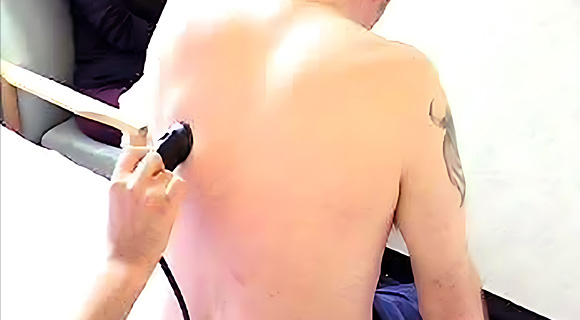
This man has advanced emphysema. He has tachypnoea and is using accessory muscles to help breath. He is also exhibiting pursed lip breathing which increases expiratory intra airway pressure that helps to prevent airway collapse. On auscultation diffuse low pitch polyphonic wheeze is heard, with quiet breath sounds. He is using a Tens machine for pain relief and has fractures to his spine due to chronic corticosteroid use.
CO2 flapping tremor
Respiratory failure with hypercapnia can lead to carbon dioxide toxicity and result in a flapping tremor (Asterixis).